
Water Damage Restoration in Kendall, Miami
Water damage restoration Kendall residents search for is a suburban, slab-on-grade question. Kendall is greater Miami's sprawling southwest suburbia — square miles of 1970s-through-1990s concrete-block single-family homes, townhome and villa communities, and canal-lined subdivisions on flat, low ground far from the beach but never far from water. The losses here are suburban losses: burst supply lines and water heaters, A/C condensate overflows, and the inland flooding that comes when Kendall's canal-and-rain drainage is overwhelmed. Restoration Doctor of Miami dispatches to Kendall 24/7 at (888) 293-5663.
The defining fact of a Kendall water loss is the slab. Almost everything here is concrete block on a poured slab — no basement, no crawlspace, tile or laminate laid directly over concrete. When water hits that floor it does not soak down into a wood subfloor; it runs sideways beneath the tile through the thin-set and slab pores, wicks up the base of the block walls and drywall, and hides where a mop never reaches. A Kendall floor can be surface-dry over a slab still holding water days later, which is exactly the trap a fast, superficial dry-out falls into.
We scope the slab before we scope the loss. Here is how Kendall's block-on-slab construction, canal-lined subdivisions, and inland flooding shape restoration — and why verified moisture readings, not a calendar, decide when a Kendall home is dry.
How we dry Kendall properties
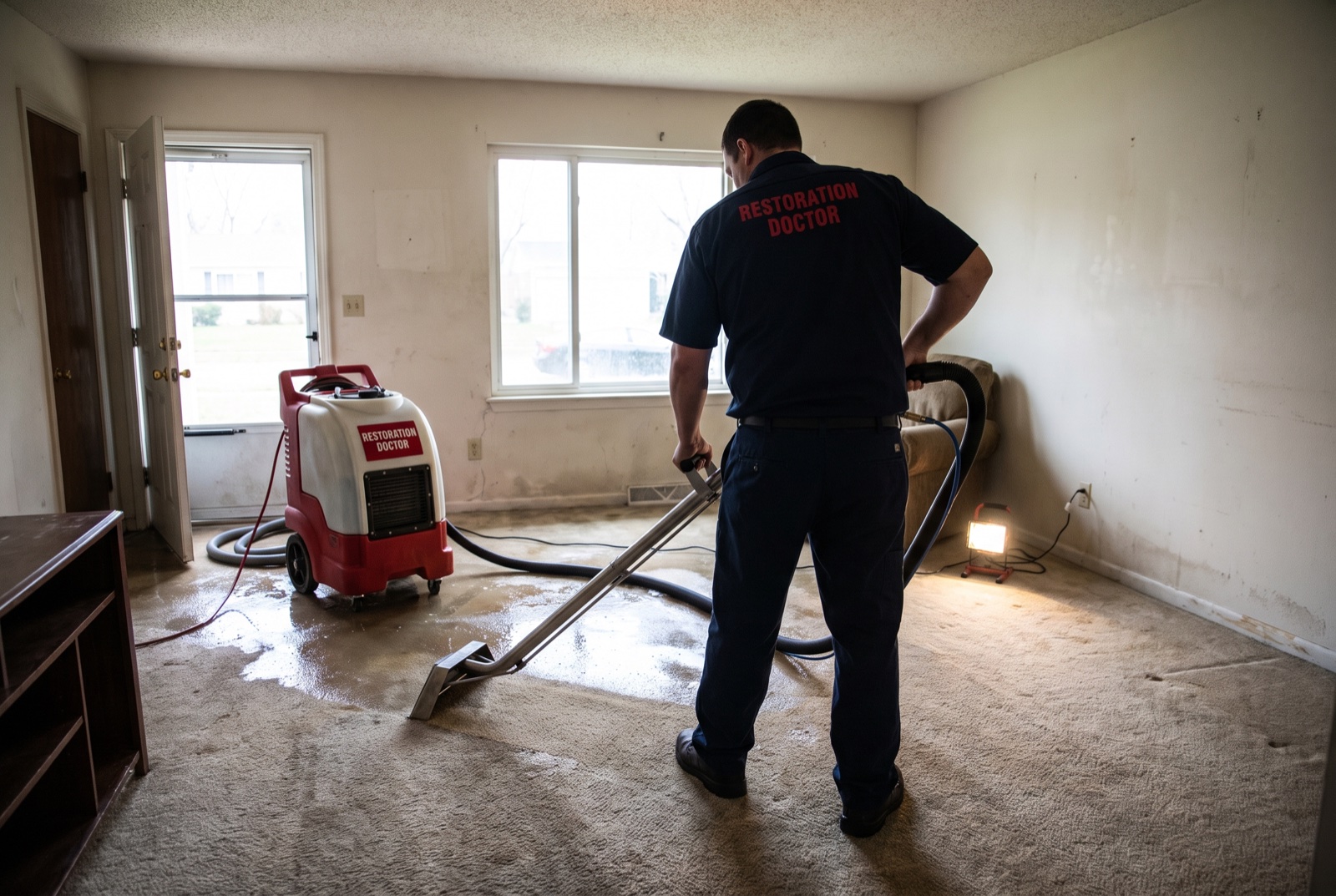
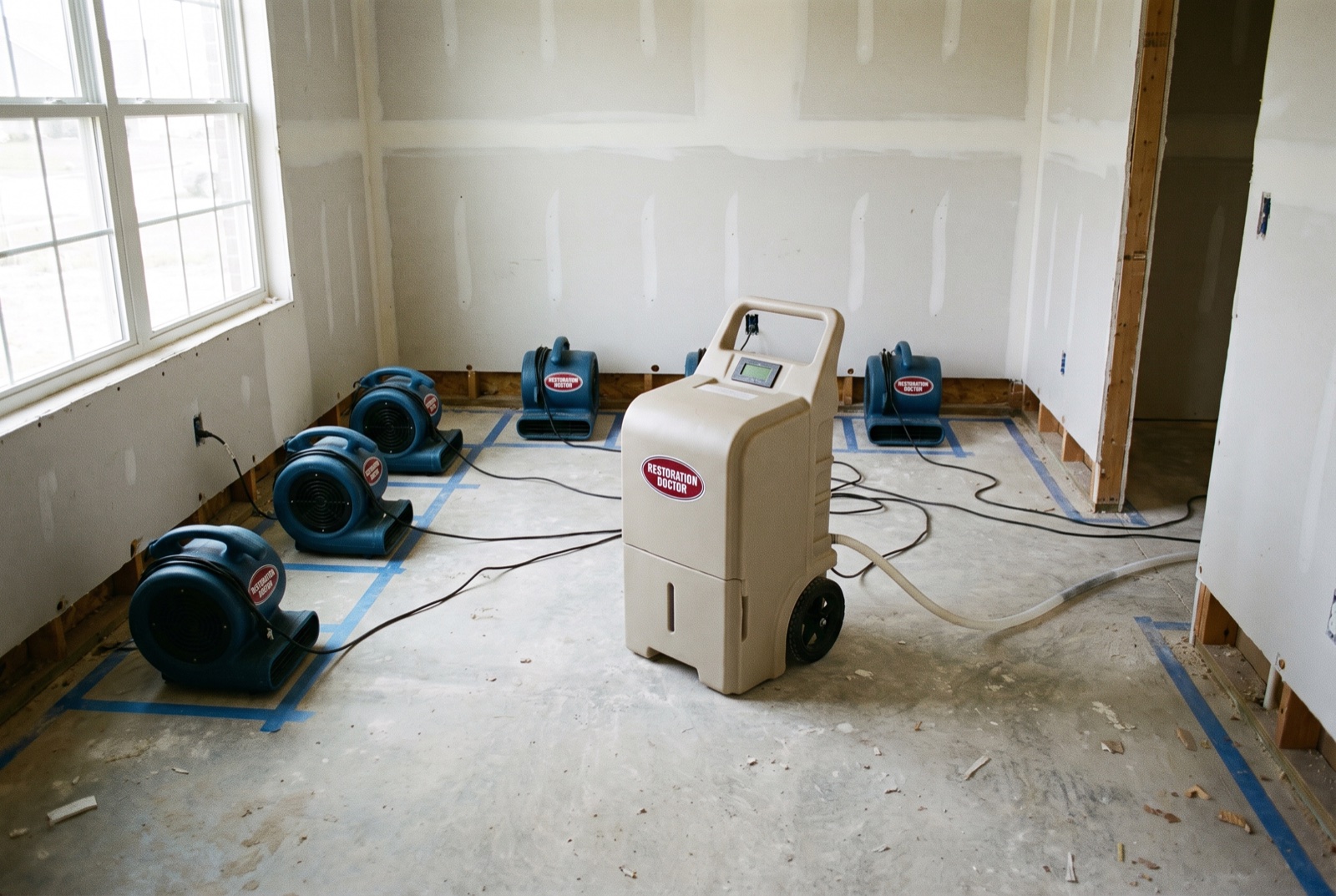
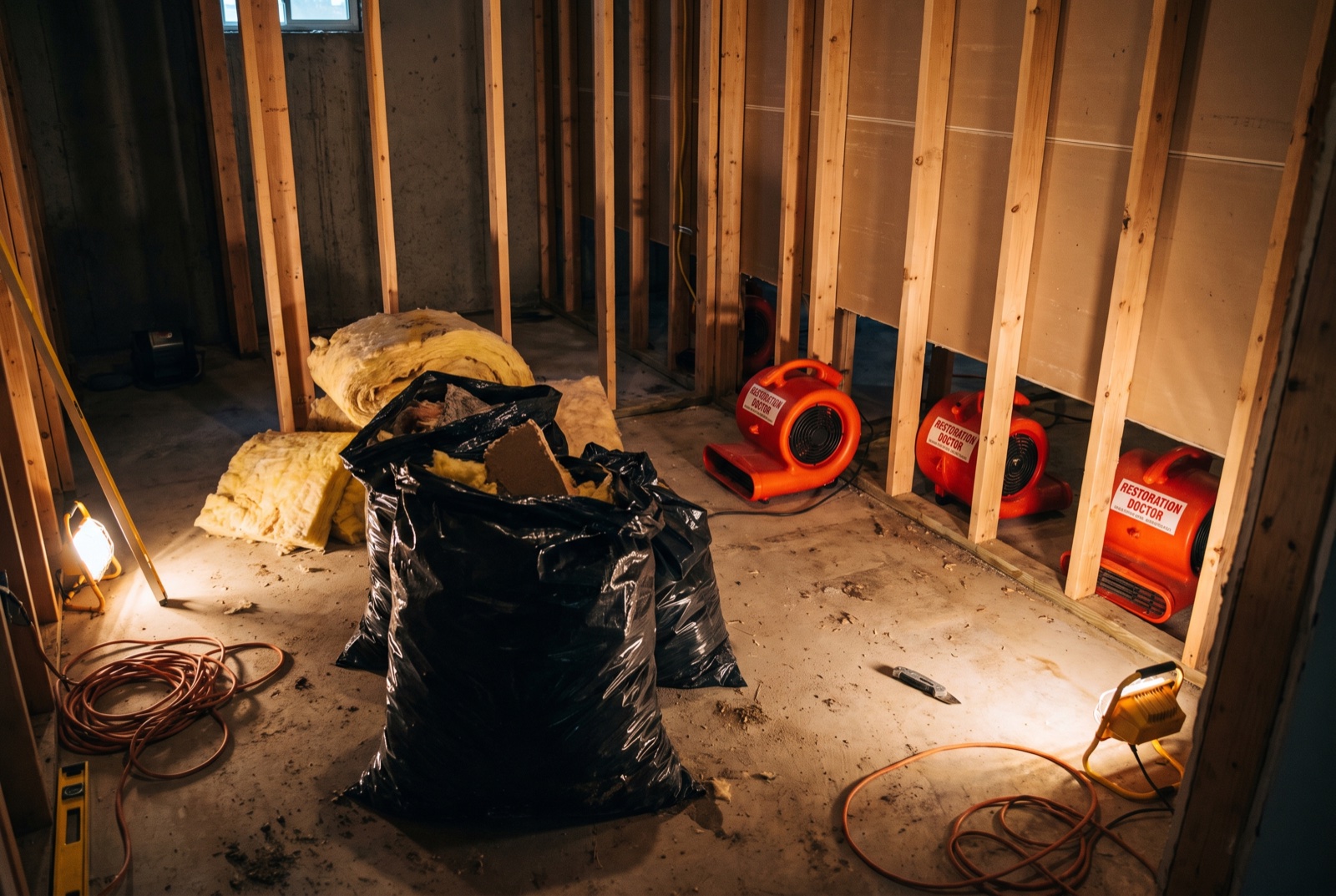
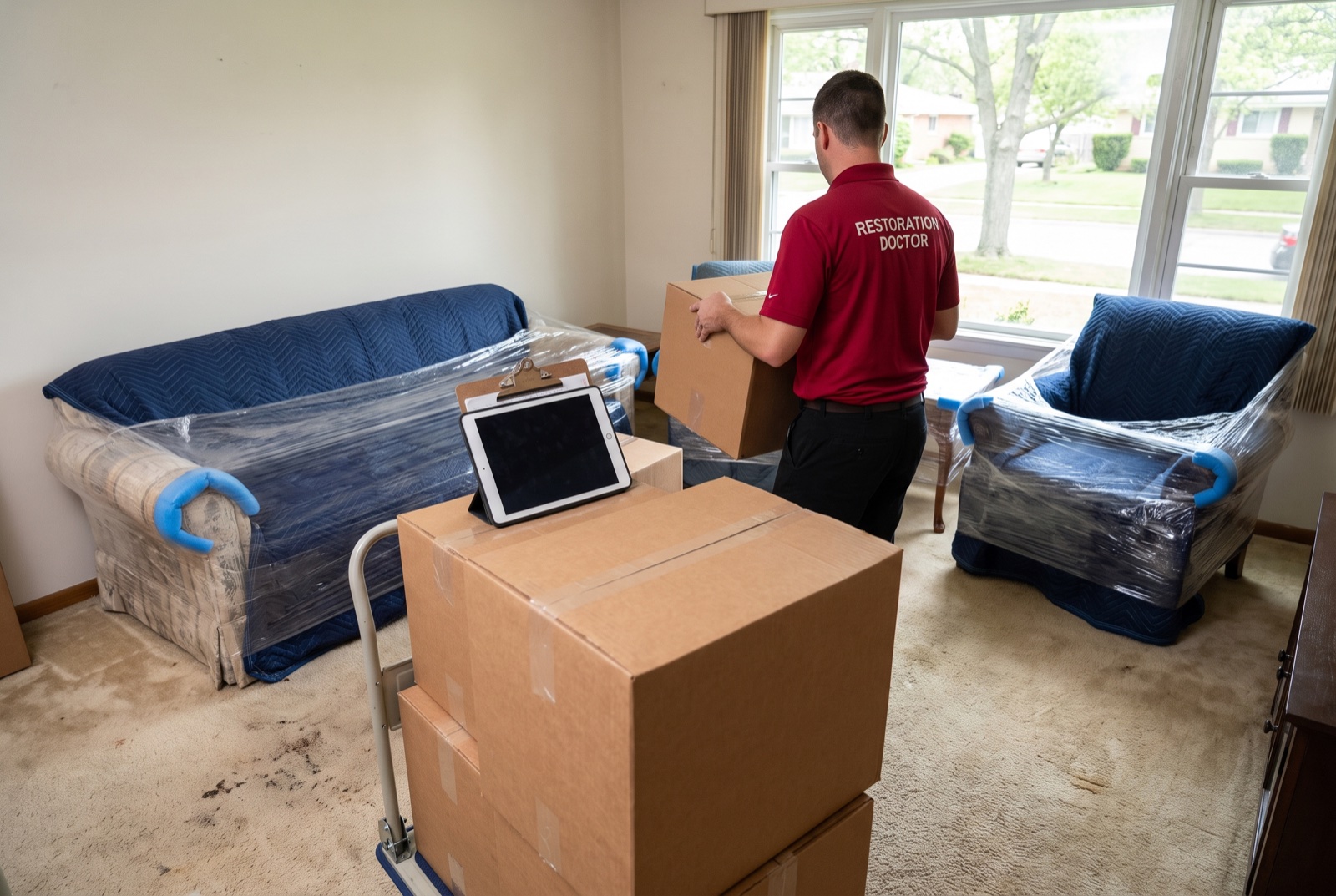
Illustrative views of the equipment and process our crews deploy — extraction, air movers, LGR dehumidification, moisture mapping, and containment.
How water damage behaves in Kendall
Tile-on-slab and the hidden lateral loss
The signature Kendall loss is water spreading unseen beneath a hard floor. A supply line or water heater lets go, the water runs sideways under the tile across the thin-set and slab, and it wicks up into the base of the block walls and the drywall — so the visible wet area badly understates the real one. Surface-dry tile routinely sits over a slab holding moisture for a week or more, and a company that calls that dry leaves the base of the walls to feed mold behind the baseboards.
We map the real extent with moisture meters and thermal imaging at the slab and wall bases, then build a drying system sized to it — air movers over surfaces, low-grain dehumidifiers pulling moisture from a sealed environment, and specialty tools like mat systems for tile-on-slab where the numbers justify saving the floor. Drying continues to documented dry-standard targets confirmed by daily logged readings, not until an arbitrary number of days has passed.
Canals, rain, and inland flooding
Kendall floods inland. Many of its subdivisions were platted around drainage canals, and the flat, low terrain relies on that canal network plus municipal drainage to shed South Florida's downpours. When intense rain outpaces the system — or a tropical storm parks over southwest Miami-Dade — canals rise and streets and low homes take on water. Kendall remembers what water and wind can do here: Hurricane Andrew's 1992 landfall tore through this part of the county, and the neighborhood has rebuilt and expanded in its shadow. Flood and surge water is contaminated under IICRC S500 and handled by extraction, removal of unsalvageable porous material, and disinfection.
Rising water is also generally excluded from standard homeowner policies and addressed, if at all, under separate flood insurance such as NFIP, and parts of Kendall sit in mapped flood zones. Policies vary and we make no coverage promises. We document the entry path and water direction carefully so the loss is classified from evidence, and because we work for you rather than the carrier, that file is yours to give your adjuster.
A/C condensate, humidity, and the mold clock
A distinctly Kendall reality: a large share of the water and mold losses here were never a plumbing leak at all — they were the air conditioning. Condensate lines clog with algae and overflow into ceilings, closets, and wall cavities, and systems that short-cycle or are shut off in vacant homes let interior humidity climb until mold grows on surfaces that were never wet from a leak. In Miami's climate the mold clock is short, so we start drying immediately and, on mold projects, always evaluate the HVAC system — handler, condensate path, and accessible ducts — because a contaminated air handler re-seeds every room it serves.
The decision to begin is yours. As the property owner you choose your restoration contractor and have the right to start emergency mitigation to stop ongoing damage without anyone's pre-approval. We work for you, not the insurance company: we begin the moment you authorize us, dry the slab to a verified standard, and hand you the carrier-ready claim file.
Kendall homes and how they fail
Kendall is overwhelmingly concrete-block-on-slab: single-family subdivisions, townhome and villa clusters, and garden apartments built out from the 1970s through the 1990s as Miami spread southwest, with newer gated communities on the western fringe. Tile, laminate, or wood laid over concrete slab is the norm, and there is no basement or crawlspace — you cannot dig into Miami-Dade's high water table. When water hits a tile-on-slab floor it travels laterally under the tile and wicks up into the block and drywall, so our drying targets wall cavities, base plates, cabinetry, and any wood floated over the slab, verified with meters rather than read off the visible waterline.
The systems that fail are the systems every suburban home runs. Braided supply lines under sinks and behind toilets, water heaters in garages and closets, washing-machine hoses, and — the distinctly Florida culprit — air-conditioning condensate lines that clog with algae and overflow into ceilings, closets, and wall cavities while the A/C runs nearly year-round. Many Kendall communities are also canal-lined, so their perimeter homes and low common areas add canal and drainage exposure to the interior-loss mix.
Kendall neighborhoods we serve
Real Miami-Dade County communities — and the water losses we most often see in each.
Canal-and-lake-lined subdivisions where perimeter homes add canal exposure to interior slab losses.
Large planned community of block-on-slab homes and villas where tile-on-slab hides lateral water spread.
Older established blocks where aging supply lines and water heaters drive interior losses.
Newer gated subdivisions on low western land exposed to canal and heavy-rain flooding.
Townhome and condo clusters where A/C condensate and shared-wall losses recur.
Full restoration services in Kendall
One operation covers every category — from emergency mitigation to full reconstruction.
Water Damage Restoration
Extraction, structural drying, and moisture verification for pipe failures, king-tide intrusion, and unit-to-unit leaks in Miami homes, condos, and canal-front properties.
Storm & Hurricane Damage Restoration
Emergency board-up, tarping, storm-surge and flood extraction, and post-hurricane structural drying for homes, canal properties, and condo towers across Miami and Miami-Dade County.
Mold Remediation
S520-based mold remediation: containment, HEPA-filtered removal, moisture-source correction, and post-remediation verification for Miami homes, condos, and waterfront properties.
Sewage Cleanup
Category 3 water mitigation: sewage extraction, contaminated material removal, disinfection, and structural drying for backups, drain failures, and tidal surcharge in Miami-Dade County.
Fire & Smoke Damage Restoration
Structure securing, soot and smoke residue removal, odor treatment, and combined fire-and-water mitigation for Miami and Miami-Dade County properties.
Contents Restoration & Pack-Out
Full-chain contents handling for Miami-Dade County: barcode-tracked inventory, pack-out, restoration cleaning, climate-controlled storage, and organized pack-back.
What Kendall homeowners look for
Kendall homeowners have seen the storm-chasers roll in after every bad season, and they are right to distrust ratings a company writes about itself. Ours are not self-reported: verified customer reviews for the Restoration Doctor operation are hosted at RestorationDoctorsReviews.com, linked to the genuine Google source rather than pasted onto this page.
Judge the record yourself, then call (888) 293-5663 when water gets into your Kendall home.
Frequently asked
Active water, mold, fire, or sewage event?
Connect directly with the Restoration Doctor team for your region. Crews are on standby 24/7 with documented response protocols.