
Water Damage Restoration in Coral Gables, Miami
Water damage restoration Coral Gables homeowners search for is, more than in most of Miami, a question of preserving a specific and protected kind of house. The City Beautiful was master-planned in the 1920s around Mediterranean revival architecture — barrel-tile roofs, stucco over coral rock and hollow tile, arched openings, and lush landscaping — and it enforces some of the strictest historic and design standards in South Florida. When water gets into a Gables home, the goal is not only to dry it but to protect finishes and materials the city will expect to be restored, not replaced. Restoration Doctor of Miami responds to Gables emergencies 24/7 at (888) 293-5663.
The Gables also has water at its edges. The Coral Gables Waterway threads through the city to Biscayne Bay, and the deep-water canals of Gables Estates, Cocoplum, and Old Cutler frame some of the most valuable waterfront homes in the country — homes whose seawalls, docks, and low yards face the same king tides and surge that flood the rest of low-lying coastal Miami. Inland, the older housing stock brings older plumbing and roofs. Both ends of the neighborhood produce water losses that reward patience and documentation over a fast, destructive tear-out.
We approach a Gables loss as a preservation problem with a deadline. Here is how the city's historic construction, waterway and canal exposure, and design standards shape restoration — and why the right scope removes only what cannot be saved.
How we dry Coral Gables properties
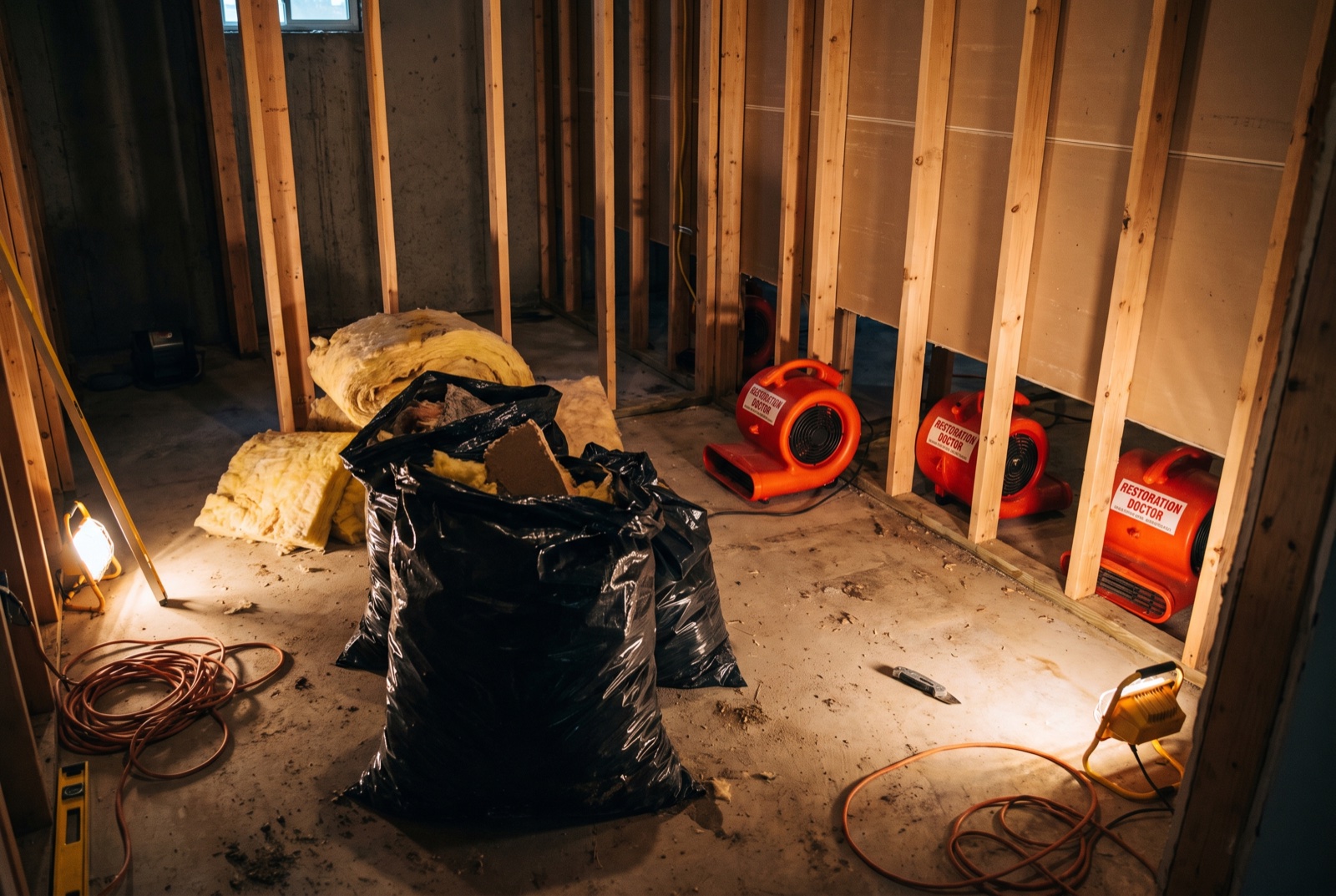
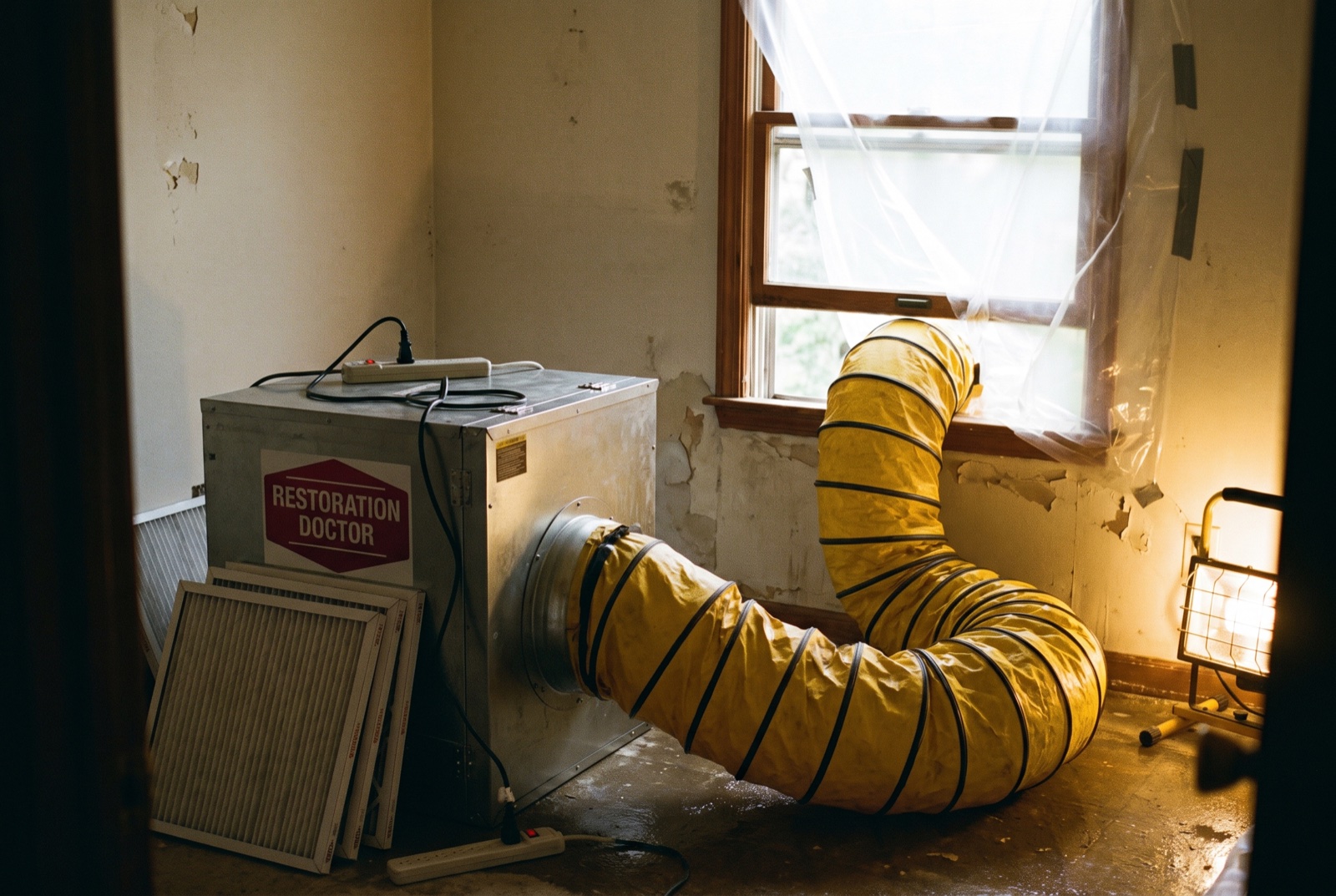
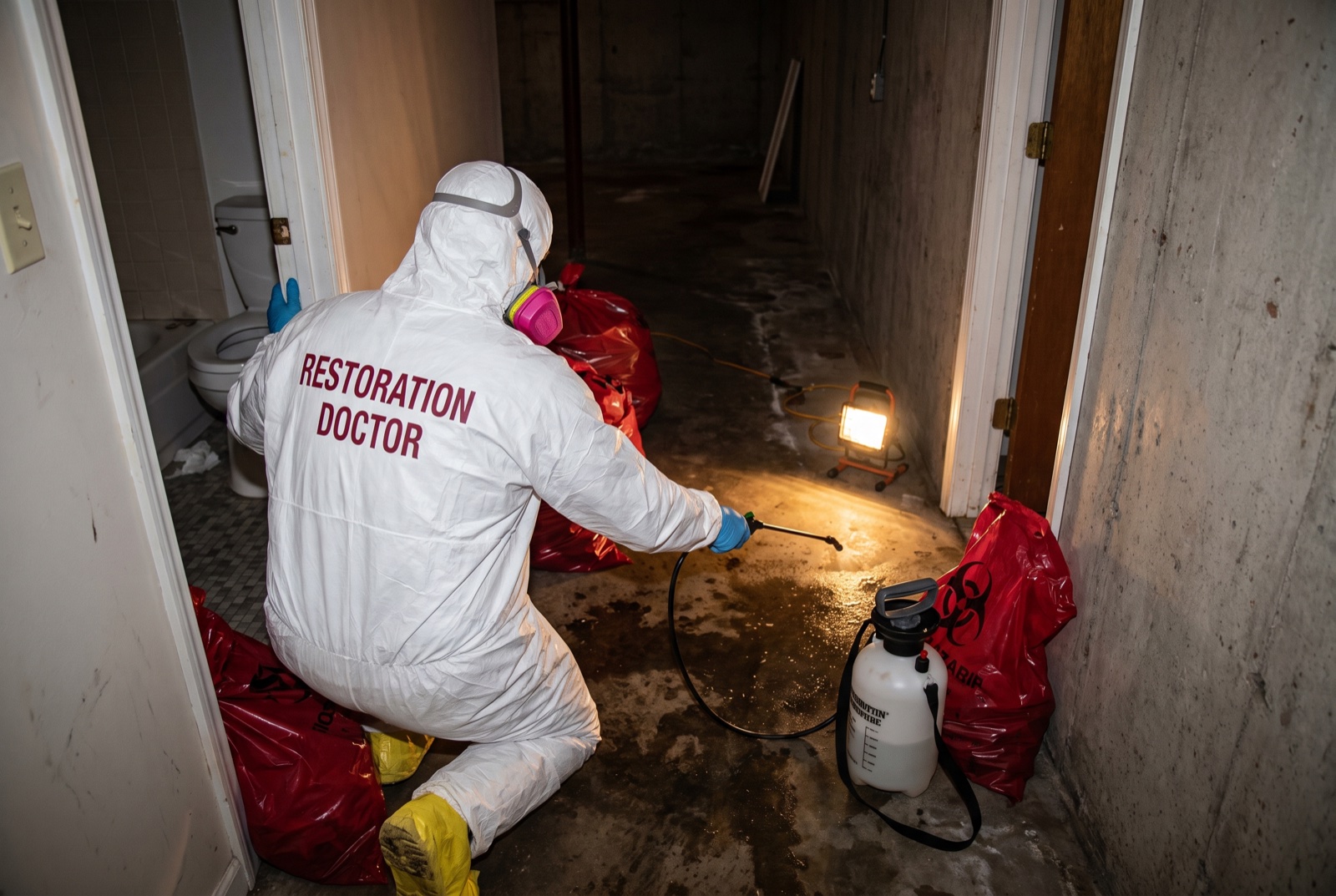
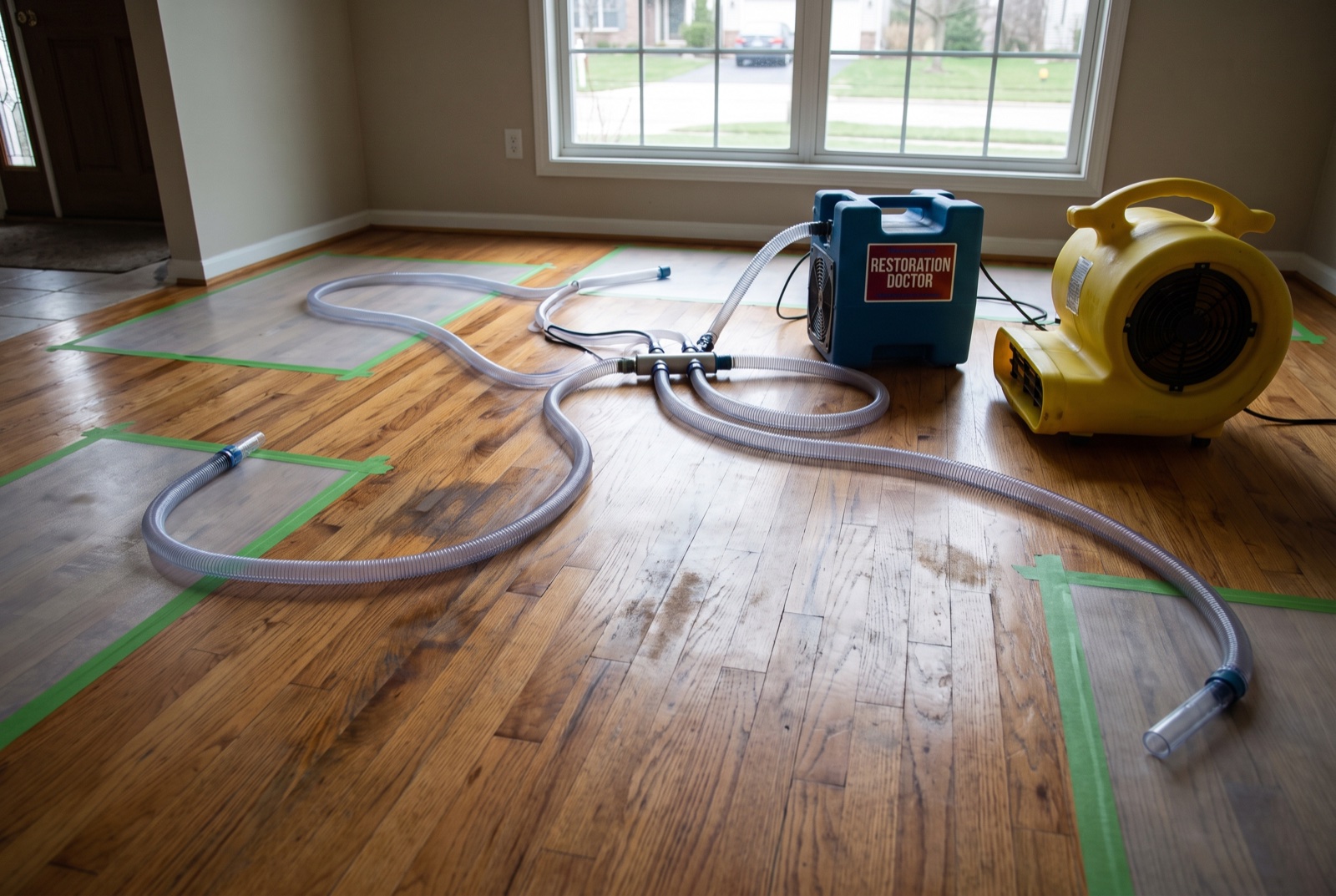
Illustrative views of the equipment and process our crews deploy — extraction, air movers, LGR dehumidification, moisture mapping, and containment.
How water damage behaves in Coral Gables
Waterway, canals, and king-tide intrusion
The waterfront Gables — Gables Estates, Cocoplum, Tahiti Beach, and the lots along the Coral Gables Waterway and Old Cutler — sits low against deep-water canals and Biscayne Bay, and it takes on brackish water the way all of low coastal Miami does. King tides push canal and bay water over aging seawalls and up storm drains onto yards, into ground-level living space, garages, and mechanical rooms, on calm sunny days; named storms drive surge with far more force. Under IICRC S500 that brackish water is contaminated, handled by extraction, removal of unsalvageable porous material, and disinfection — and the salt it leaves keeps corroding hardware and drawing humidity long after the surface reads dry.
Rising water is also generally excluded from standard homeowner policies and addressed, if at all, under separate flood coverage such as NFIP, and the waterfront Gables largely sits in mapped flood zones. Policies vary and we make no coverage promises, but we document the entry path, salinity-exposed materials, and water direction carefully so the loss is classified from evidence. We work for you, not the insurer, so that carrier-ready record is yours.
Old plumbing, old roofs, and interior losses
Away from the water, the Gables' losses are the losses of a nearly century-old neighborhood. Original supply and drain piping fails after decades in South Florida's aggressive conditions, barrel-tile roofs let wind-driven rain into attics and wall tops, and condensate lines clog and overflow into ceilings and closets. Because plaster and coral-rock assemblies hide moisture, these interior losses are frequently larger than they look — a small ceiling stain over a thoroughly wet wall cavity is a common Gables presentation.
Our process runs to IICRC S500: classify the water, map moisture with meters and thermal imaging, extract, and build a drying system sized to the real load, verifying against documented dry-standard targets rather than a calendar. In historic assemblies that patience pays off, because it distinguishes material that can be dried and kept from material that genuinely has to come out.
Preservation, humidity, and the owner's call
Coral Gables' design and historic standards mean the city — and often the homeowner's own attachment to the house — expects finishes, tile, plaster, and detailing to be restored rather than swapped for modern substitutes. Our default is equipment-led drying that preserves salvageable historic material, with controlled removal reserved for what contamination or established mold has claimed. Miami's relentless humidity, worse under the Gables' heavy canopy, shortens the mold clock, so drying begins immediately; where growth is established we remediate under IICRC S520 with containment.
And the decision to begin is yours. As the property owner you choose your restoration contractor and have the right to begin emergency mitigation to stop ongoing damage without anyone's pre-approval. We work for you, not the insurance company — we start the moment you authorize us, protect the material the Gables will expect restored, and hand you the documented claim file.
Coral Gables homes and how they fail
Coral Gables is defined by its 1920s and 1930s Mediterranean revival housing: stucco over coral rock and hollow clay tile, barrel-tile roofs, plaster interiors, and heavy landscaping, joined by mid-century homes, later infill, and a downtown of low- and mid-rise condos and offices along Miracle Mile and Ponce de Leon. Coral rock and hollow-tile walls are porous and hold water in ways drywall over block does not, and plaster interiors hide saturation behind a surface that reads dry. Reading the visible waterline badly understates a Gables loss, so our work leans on thermal imaging and meters to find water in the wall assembly itself.
Age also drives the failures. Original galvanized and early copper supply lines, aging cast-iron drains, and barrel-tile roofs past their service life are recurring sources, as are the air-conditioning condensate lines that run year-round in every South Florida home. Because the city expects historic material and finishes to be restored where possible, our drying targets wall cavities, cabinetry, plaster, and flooring with methods that preserve salvageable material — controlled and documented rather than reflexively demolished.
Coral Gables neighborhoods we serve
Real Miami-Dade County communities — and the water losses we most often see in each.
Deep-water canal estates where king tides test aging seawalls and brackish water reaches ground level.
Waterfront enclave on the bay and waterway, exposed to tidal and surge intrusion at grade.
Canal-front homes where seawall overtopping and rising groundwater drive contaminated losses.
Low southern estates near the canals where surge and tide reach further inland than expected.
Historic commercial core and mid-rises where old plumbing and roofs drive interior losses.
Full restoration services in Coral Gables
One operation covers every category — from emergency mitigation to full reconstruction.
Water Damage Restoration
Extraction, structural drying, and moisture verification for pipe failures, king-tide intrusion, and unit-to-unit leaks in Miami homes, condos, and canal-front properties.
Storm & Hurricane Damage Restoration
Emergency board-up, tarping, storm-surge and flood extraction, and post-hurricane structural drying for homes, canal properties, and condo towers across Miami and Miami-Dade County.
Mold Remediation
S520-based mold remediation: containment, HEPA-filtered removal, moisture-source correction, and post-remediation verification for Miami homes, condos, and waterfront properties.
Sewage Cleanup
Category 3 water mitigation: sewage extraction, contaminated material removal, disinfection, and structural drying for backups, drain failures, and tidal surcharge in Miami-Dade County.
Fire & Smoke Damage Restoration
Structure securing, soot and smoke residue removal, odor treatment, and combined fire-and-water mitigation for Miami and Miami-Dade County properties.
Contents Restoration & Pack-Out
Full-chain contents handling for Miami-Dade County: barcode-tracked inventory, pack-out, restoration cleaning, climate-controlled storage, and organized pack-back.
What Coral Gables homeowners look for
Gables owners guard their homes and their city's standards, and they are right to distrust ratings a company writes about itself. Ours are not self-reported: verified customer reviews for the Restoration Doctor operation are hosted at RestorationDoctorsReviews.com, linked to the genuine Google source rather than pasted onto this page.
Judge the record yourself, then call (888) 293-5663 when water gets into a Gables home.
Frequently asked
Active water, mold, fire, or sewage event?
Connect directly with the Restoration Doctor team for your region. Crews are on standby 24/7 with documented response protocols.