
Water Damage Restoration in Brickell, Miami
Water damage restoration Brickell Miami residents search for is, almost always, a high-rise question. Brickell is a vertical neighborhood — a dense wall of post-tensioned concrete condo towers along Brickell Avenue, Brickell Bay Drive, and the Miami River mouth, where thousands of units stack over shared plumbing chases and a single failed supply line forty floors up can surface in a dozen apartments below. Restoration Doctor of Miami dispatches to Brickell emergencies around the clock at (888) 293-5663, from our operations center a few blocks away at 1200 Brickell Avenue.
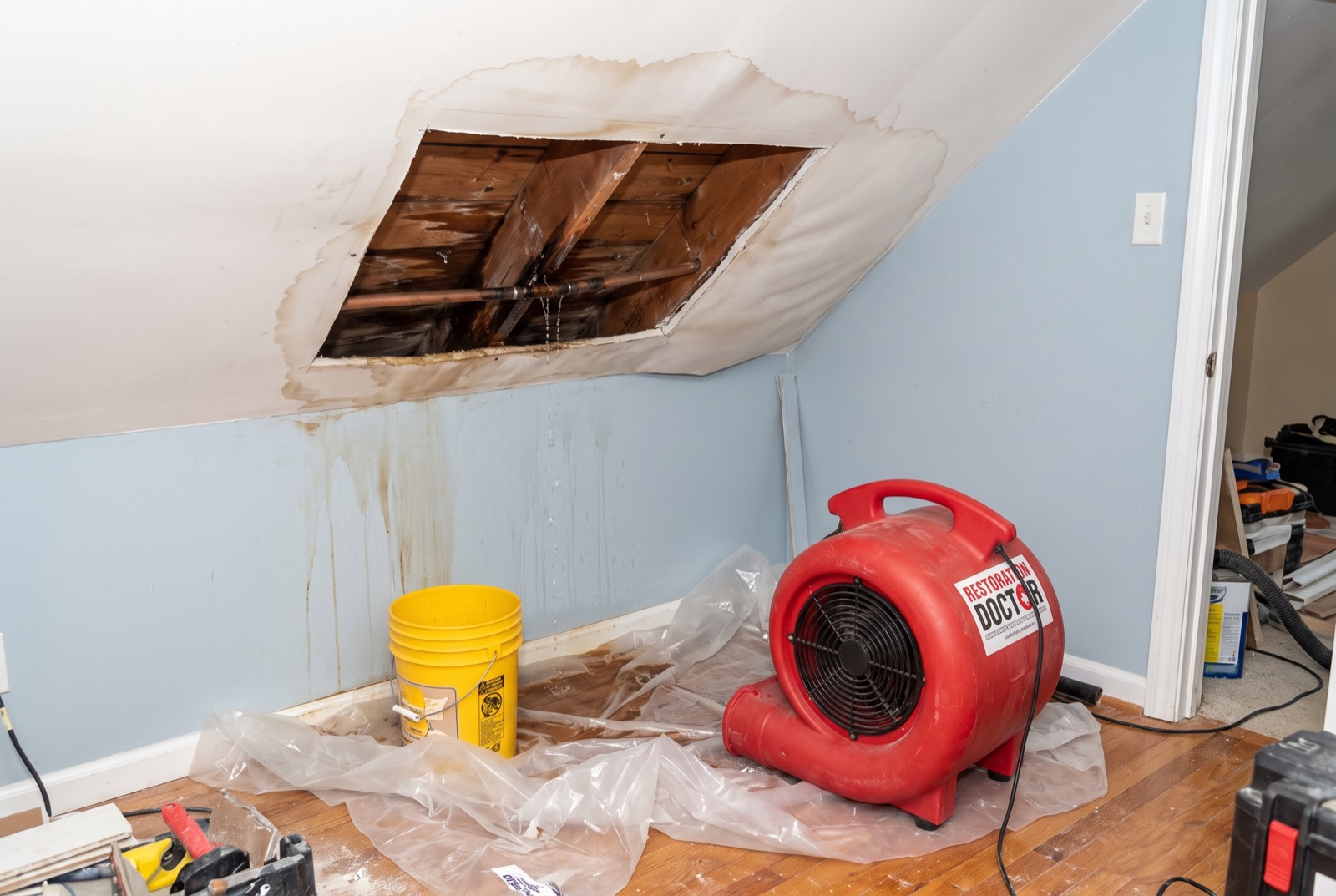
The physics of a Brickell water loss are the physics of a tower. Water in a high-rise does not spread across a floor and stop — it follows the concrete deck and the vertical chases, finds the path of least resistance through penetrations and expansion joints, and re-emerges on lower floors far from where it began. The owner staring at a stained ceiling is frequently not the owner whose water heater, dishwasher hose, or A/C condensate line actually failed. That reality shapes every step: the first job is not just to dry a unit but to trace the migration path through the building.
We run South Florida operations from the heart of Brickell, so response here is genuinely local rather than dispatched from across the county. Below is how tower construction, shared risers, and Biscayne Bay's king tides drive restoration in Brickell — and why the building type decides the drying plan before the loss does.
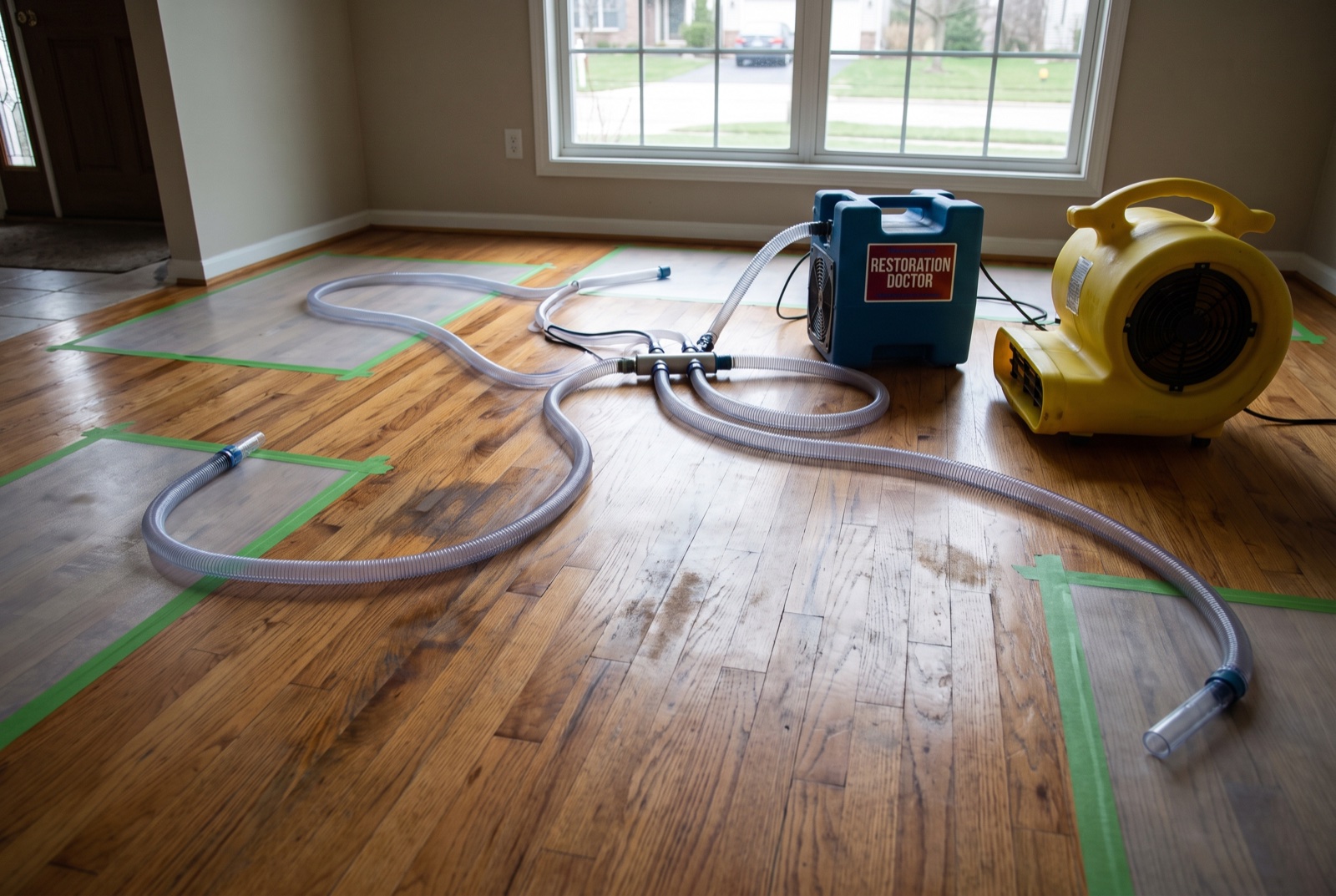
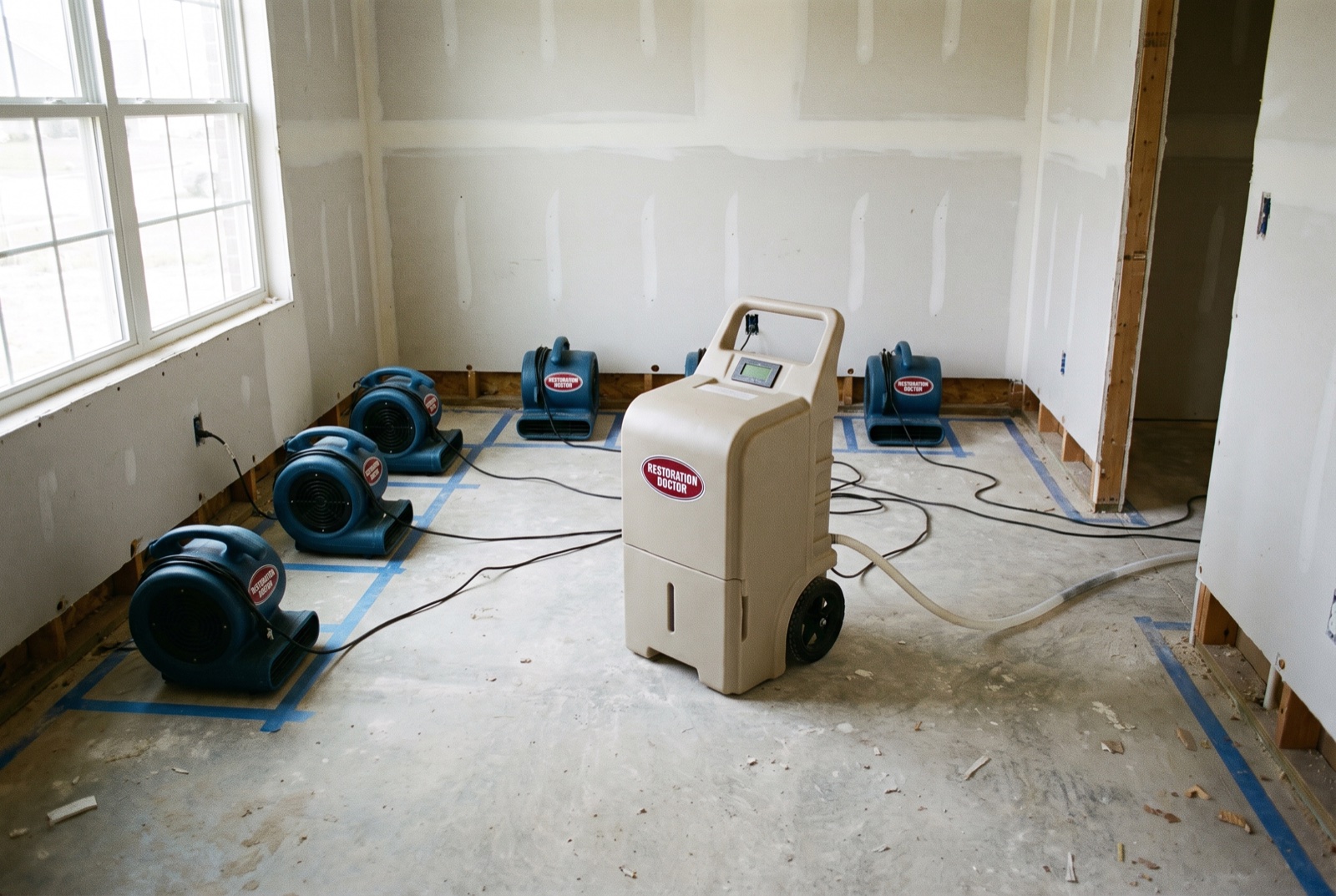
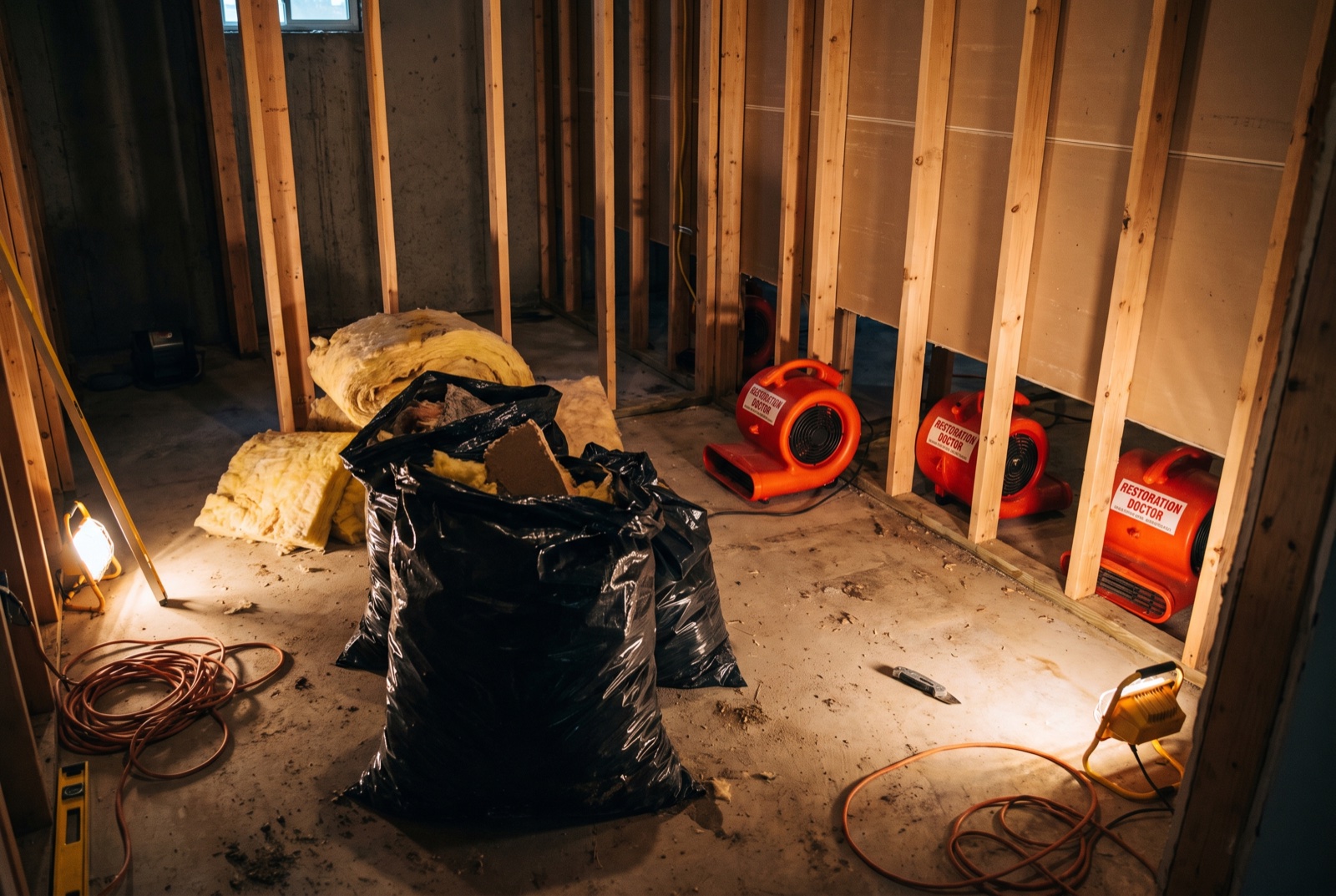
How we dry Brickell properties
Illustrative views of the equipment and process our crews deploy — extraction, air movers, LGR dehumidification, moisture mapping, and containment.
How water damage behaves in Brickell
Stacked risers and the vertical loss
The signature Brickell loss is unit-to-unit migration. A braided steel supply line behind a toilet, a failed washing-machine hose, a cracked condensate pan, or a burst valve on a high floor releases water that immediately finds the concrete deck and the plumbing chase shared by the stack. It travels down, surfacing as wet ceilings and walls one, two, or several floors below. Because the water rarely reappears directly beneath its source, drying a single visible unit while ignoring the migration path leaves saturated cavities that feed mold behind the baseboards for weeks.
We scope the stack, not just the room. Moisture meters and thermal imaging trace the water through the deck, the chase, and the demising walls, so drying goes where the moisture actually sits rather than only where the stain appears. In a building this dense that also means coordinating access across several units and the association at once — which is why documentation that separates each unit's affected materials cleanly is not paperwork, it is what keeps the project moving instead of stalling in a dispute over who owns the wet drywall.
King tides, Brickell Bay Drive, and street flooding at grade
Brickell floods from Biscayne Bay as well as from its plumbing. Each autumn the king tides push bay water up through the storm drains along Brickell Bay Drive and the low streets near the Miami River mouth, and the neighborhood's own success — decades of dense construction on filled, low-lying bayfront land — means the water has nowhere to go. On a clear, sunny afternoon, tidal water can stand in podium garages, cross lobby thresholds, and reach ground-floor retail with no storm in the forecast. That intrusion is brackish bay water, not a clean pipe leak, and under the IICRC S500 standard it is treated as contaminated: extracted, with unsalvageable porous materials removed and surfaces disinfected, not simply dried.
The stakes in a tower are concentrated in the spaces the water reaches first. Elevator pits, fire-pump and domestic-water pump rooms, emergency generators, and electrical switchgear frequently live at or below grade, and salt water in any of them is both a restoration problem and a life-safety one. We document tidal and rain intrusion into these spaces specifically, flag salt-exposed equipment for the building's engineers, and dry and decontaminate to a verified standard rather than to an eyeballed waterline.
Speed, humidity, and the owner's authority in a condo
Brickell's drying clock is short. Sealed towers with year-round air conditioning hold humidity that never gives a wet assembly a break, and saturated drywall behind a demising wall can begin supporting microbial growth within a couple of days. We begin extraction and structural drying immediately and monitor to defined moisture targets; where growth is already established, we remediate under the IICRC S520 standard with containment and controlled removal so a tower's shared air handlers do not carry spores to neighboring units.
And the decision to start is yours. As a Florida property owner — or a unit owner acting on your own interior — you choose your restoration contractor, and emergency mitigation to stop ongoing damage is your right; you do not need the association's or a carrier's pre-approval to keep your unit from getting worse while responsibility is sorted out. We work for you, not the insurance company: we begin the moment you authorize us and build the carrier-ready file your claim will lean on, so you hand your adjuster a documented loss rather than an argument.
Brickell homes and how they fail
Brickell is overwhelmingly high-rise, and overwhelmingly newer than the rest of Miami: a run of post-tensioned concrete condominium and rental towers built largely from the 2000s boom onward, plus a cluster of older 1980s and 1990s mid-rises closer to the river. These are lightweight interior assemblies — gypsum walls and hard flooring over concrete decks, shared plumbing walls between stacked units, and mechanical closets holding air handlers that run nearly year-round. When a supply line, angle stop, or condensate line lets go, the water rides the deck and the chase, and it is the unit below, not the unit of origin, that usually calls first.
The ground-level and podium spaces tell the other half of the story. Brickell's towers sit on parking podiums, lobbies, amenity decks, and retail bays that face the street and the bay, and those low elevations are where tidal water and heavy-rain street flooding intrude — flooding garages, elevator pits, generator and pump rooms, and mechanical spaces. Our drying work in Brickell therefore splits by elevation: interior tower losses are traced vertically through the concrete and the chases, while podium and ground-floor losses are handled as intrusion events, sometimes contaminated, that threaten the building's electrical and mechanical heart.
Brickell neighborhoods we serve
Real Miami-Dade County communities — and the water losses we most often see in each.
The spine of high-rise towers where stacked-riser and condensate losses migrate down through the concrete decks.
Bayfront edge where king tides push Biscayne Bay water up storm drains into podium garages and lobbies.
Man-made island of towers ringed by the bay, exposed to tidal intrusion at grade on all sides.
Mixed retail-and-residential core where ground-floor commercial bays take on rain and tidal street water.
Older mid-rises near the Miami River mouth where riverine flooding and aging plumbing combine.
Full restoration services in Brickell
One operation covers every category — from emergency mitigation to full reconstruction.
Water Damage Restoration
Extraction, structural drying, and moisture verification for pipe failures, king-tide intrusion, and unit-to-unit leaks in Miami homes, condos, and canal-front properties.
Storm & Hurricane Damage Restoration
Emergency board-up, tarping, storm-surge and flood extraction, and post-hurricane structural drying for homes, canal properties, and condo towers across Miami and Miami-Dade County.
Mold Remediation
S520-based mold remediation: containment, HEPA-filtered removal, moisture-source correction, and post-remediation verification for Miami homes, condos, and waterfront properties.
Sewage Cleanup
Category 3 water mitigation: sewage extraction, contaminated material removal, disinfection, and structural drying for backups, drain failures, and tidal surcharge in Miami-Dade County.
Fire & Smoke Damage Restoration
Structure securing, soot and smoke residue removal, odor treatment, and combined fire-and-water mitigation for Miami and Miami-Dade County properties.
Contents Restoration & Pack-Out
Full-chain contents handling for Miami-Dade County: barcode-tracked inventory, pack-out, restoration cleaning, climate-controlled storage, and organized pack-back.
What Brickell homeowners look for
Brickell owners have seen every restoration logo that chases a tower flood, and they are right to distrust ratings a company types about itself. Ours are not self-reported: verified customer reviews for the Restoration Doctor operation are hosted at RestorationDoctorsReviews.com, linked to the genuine Google source rather than pasted onto this page.
Judge the record yourself, then call (888) 293-5663 when water comes down the stack.
Frequently asked
Active water, mold, fire, or sewage event?
Connect directly with the Restoration Doctor team for your region. Crews are on standby 24/7 with documented response protocols.