
Water Damage Restoration in Coconut Grove, Miami
Water damage restoration Coconut Grove Miami homeowners search for is different from the rest of the city, because the Grove is different from the rest of the city. Miami's oldest continuously inhabited neighborhood is a low, green, bayfront village of historic wood-frame cottages, coral-rock estates, and mid-century homes tucked under one of the densest tree canopies in South Florida — a place where the housing is older, the elevations are low, and the water arrives from Biscayne Bay as readily as from a pipe. Restoration Doctor of Miami responds to Grove emergencies 24/7 at (888) 293-5663 from our Brickell operations center minutes to the north.
The Grove's charm is also its exposure. Historic homes here were built in eras before modern moisture detailing, many in wood frame and native oolitic coral rock rather than the concrete block that dominates newer Miami, and the neighborhood's celebrated canopy keeps roofs, walls, and yards perpetually shaded and damp. Add a shoreline on Biscayne Bay that floods during king tides and storm surge, and you have a neighborhood where water losses tend to be older-building losses — hidden, slow to dry, and quick to grow mold.
We treat a Grove loss as an old-Miami building problem first and a water problem second. Here is how the neighborhood's historic construction, tree canopy, and bayfront exposure shape restoration — and why the wrong drying plan can do more damage than the water did.
How we dry Coconut Grove properties
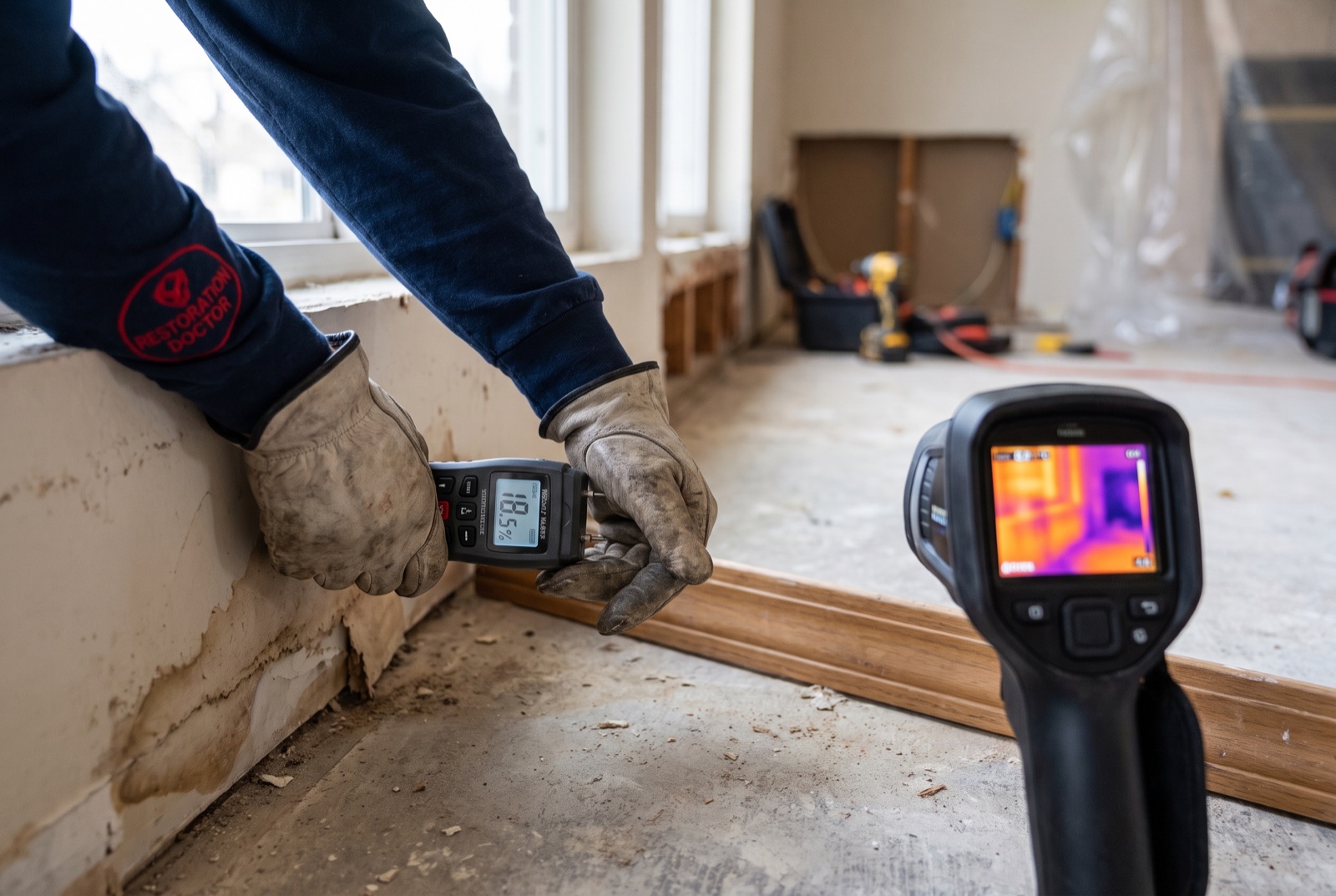
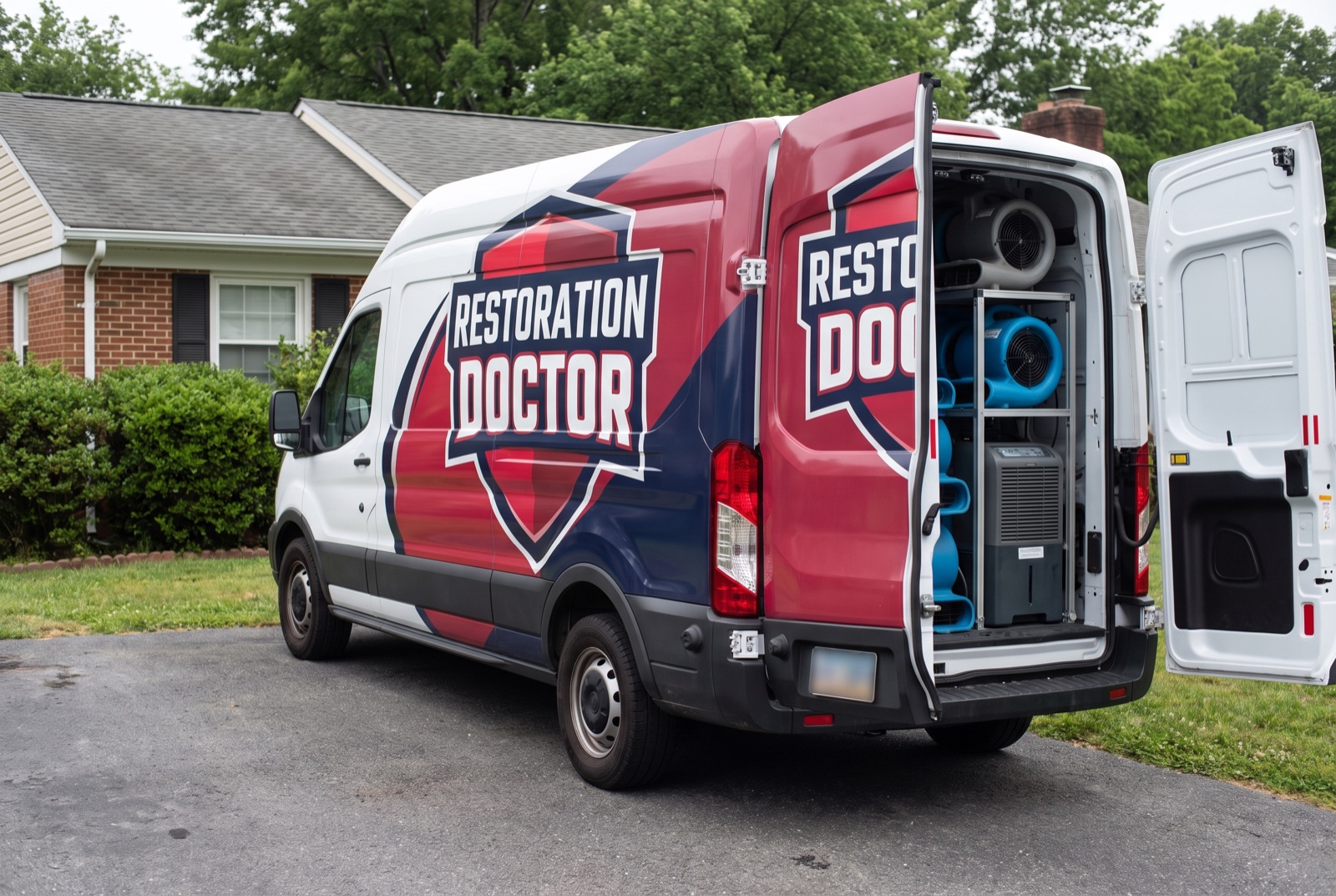
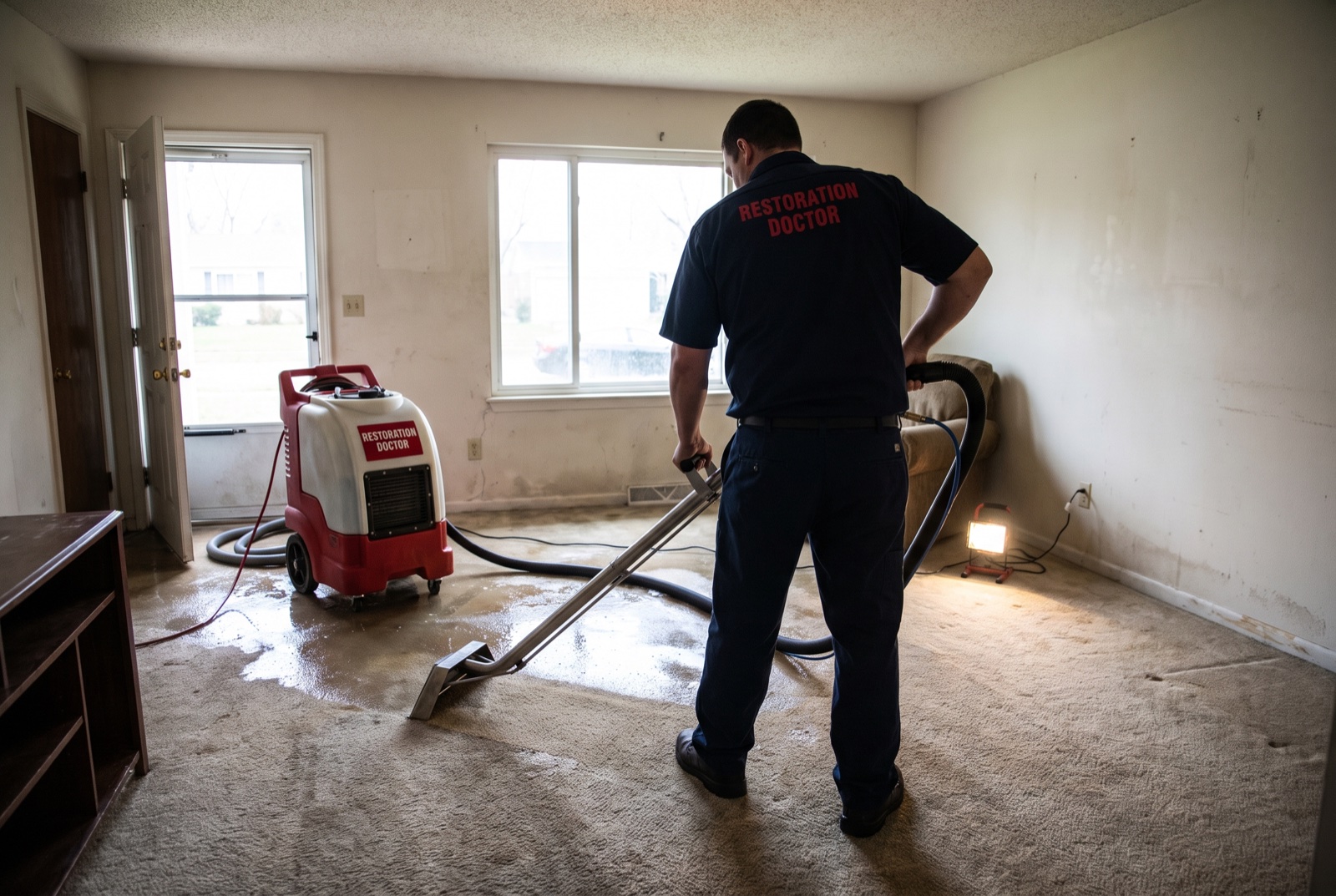
Illustrative views of the equipment and process our crews deploy — extraction, air movers, LGR dehumidification, moisture mapping, and containment.
How water damage behaves in Coconut Grove
Bayfront king tides and storm surge
The Grove's shoreline — from Dinner Key and the marinas to the estate lots along the bay — sits low and close to the water, and it floods. King tides push Biscayne Bay across seawalls, docks, and low yards on calm days, and named storms drive surge up into the bayfront blocks with far more force. Both deliver brackish, contaminated water, which under IICRC S500 is handled by extraction, removal of unsalvageable porous materials, and disinfection rather than drying in place. In a neighborhood of historic homes, that intrusion threatens irreplaceable material, so speed and correct classification matter doubly.
Surge and tidal flooding also generally fall outside standard homeowner policies — rising water is typically excluded and covered, if at all, under separate flood insurance such as NFIP coverage, and much of the low-lying Grove sits in mapped flood zones. Policies vary and we make no coverage promises, but we document the water's entry path in careful detail, because that classification is decided from evidence and it shapes how the claim is handled. We work for you, not the carrier, so the record we build is yours.
The canopy, the humidity, and hidden mold
Coconut Grove's tree canopy is the reason people love it and the reason mold thrives here. Dense shade keeps roofs, north walls, and crawl-accessible spaces from ever fully drying, mature roots and leaf litter clog gutters and yard drainage, and the ambient humidity under the trees runs even higher than Miami's already punishing baseline. In older wood-frame and plaster homes, that means a modest, unaddressed leak becomes a colonization event unusually fast — often before the homeowner sees a stain.
We treat every Grove water loss as a mold-prevention project and every Grove mold project as a moisture investigation. Killing visible growth without finding and correcting the water that fed it — a roof detail, a canopy-shaded wall that never dries, a slow supply-line weep behind plaster — guarantees it returns. Remediation follows IICRC S520 with containment and physical removal, and we document the moisture source so the fix is permanent rather than cosmetic.
Historic material, and removing only what cannot be saved
In a replaceable drywall interior, aggressive demolition is cheap insurance. In a historic Grove home, tearing out original coral-rock, heart-pine framing, or plaster-on-lath because it is faster is a real loss, so our default is equipment-led drying that preserves material the numbers say can be saved, with controlled removal reserved for what is genuinely unsalvageable or contaminated. We meter to a documented dry standard rather than guessing, so the decision to keep or remove a historic assembly is made on evidence.
That said, contamination overrides preservation. Brackish surge water, sewage, or long-established mold in porous historic material has to come out for health and structural reasons regardless of its age or beauty, and we are straight with owners about that line. What we will not do is remove salvageable history to pad a scope — we work for you, and the honest call is the one that serves your home and your claim.
Coconut Grove homes and how they fail
Coconut Grove carries some of the oldest and most varied housing stock in Miami-Dade. Historic wood-frame Bahamian and Conch-style cottages in the West Grove, coral-rock and stucco estates along the bay, 1920s Mediterranean revivals, mid-century ranch homes, and a scattering of newer luxury builds and mid-rise condos all share the same shaded, humid streets. Wood-frame and coral-rock construction behaves nothing like the concrete block of newer neighborhoods: water wicks into old-growth framing, plaster-on-lath walls, and porous rock, and it hides there. A Grove home can present a small ceiling stain over a wall cavity that is thoroughly saturated.
Because the buildings are older, the failures are often the building's own systems. Aging galvanized and early copper supply lines, original cast-iron drains, roof leaks through mature tile and shingle, and window and door details that were never watertight all let water in. Our drying work in the Grove leans heavily on thermal imaging and meters, because reading the visible waterline in a plaster-and-wood home badly underestimates the loss — and because saving historic material, when the numbers allow, matters more here than in a replaceable drywall interior.
Coconut Grove neighborhoods we serve
Real Miami-Dade County communities — and the water losses we most often see in each.
Historic Bahamian wood-frame cottages where old framing and plaster hide water and grow mold fast.
Low shoreline lots and marinas exposed to king-tide and storm-surge intrusion off Biscayne Bay.
Mixed historic and mid-rise core where older plumbing and roofs drive interior losses.
Canopy-shaded streets where perpetual damp and clogged drainage feed hidden mold.
Coral-rock and 1920s stucco homes where porous rock and stucco wick water into cavities.
Full restoration services in Coconut Grove
One operation covers every category — from emergency mitigation to full reconstruction.
Water Damage Restoration
Extraction, structural drying, and moisture verification for pipe failures, king-tide intrusion, and unit-to-unit leaks in Miami homes, condos, and canal-front properties.
Storm & Hurricane Damage Restoration
Emergency board-up, tarping, storm-surge and flood extraction, and post-hurricane structural drying for homes, canal properties, and condo towers across Miami and Miami-Dade County.
Mold Remediation
S520-based mold remediation: containment, HEPA-filtered removal, moisture-source correction, and post-remediation verification for Miami homes, condos, and waterfront properties.
Sewage Cleanup
Category 3 water mitigation: sewage extraction, contaminated material removal, disinfection, and structural drying for backups, drain failures, and tidal surcharge in Miami-Dade County.
Fire & Smoke Damage Restoration
Structure securing, soot and smoke residue removal, odor treatment, and combined fire-and-water mitigation for Miami and Miami-Dade County properties.
Contents Restoration & Pack-Out
Full-chain contents handling for Miami-Dade County: barcode-tracked inventory, pack-out, restoration cleaning, climate-controlled storage, and organized pack-back.
What Coconut Grove homeowners look for
Grove homeowners are protective of old houses and skeptical of contractors who treat them like teardowns, and they are right to distrust ratings a company writes about itself. Ours are not self-reported: verified customer reviews for the Restoration Doctor operation are hosted at RestorationDoctorsReviews.com, linked to the genuine Google source rather than pasted onto this page.
Judge the record yourself, then call (888) 293-5663 when water gets into an old Grove home.
Frequently asked
Active water, mold, fire, or sewage event?
Connect directly with the Restoration Doctor team for your region. Crews are on standby 24/7 with documented response protocols.